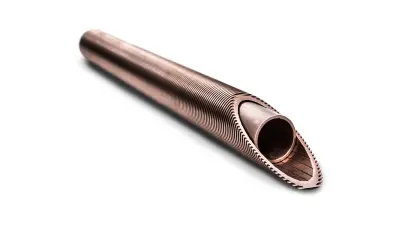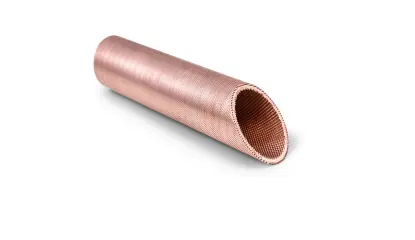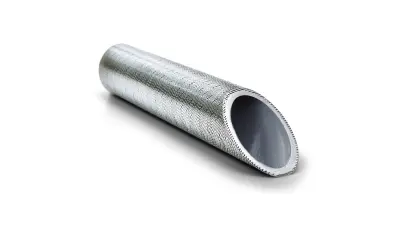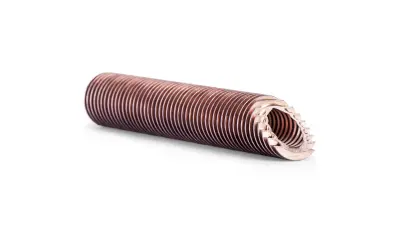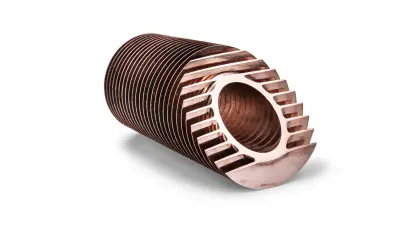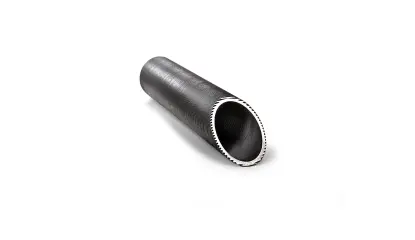


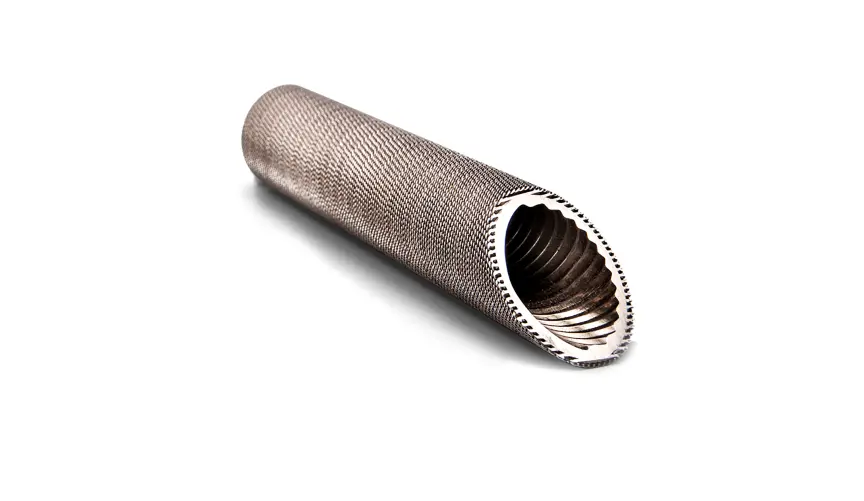
Enhanced surface tube Gewa-CLF

Enhanced Surface Condenser Tubes

Optimized heat transfer for your shell and tube heat exchanger with enhanced surface tubes of the GEWA-C product family. They are engineered to maximize shell‑side condensation efficiency in modern HVAC and refrigeration systems.
Additional information


Material overview

ASTM-UNS No.
Wieland Designation ⁠EN Designation EN No. JIS No. Data Sheet
C12200
K21 Cu-DHP CW024A - -
C70600
L10 CuNi10Fe1Mn CW352H - -
C71500
L30 CuNi30Mn1Fe CW354H - -
C68700
S76 CuZn20Al2As CW702R - -
K01200
O41 - - - -

Optimized heat transfer for your shell-and-tube heat exchanger


Our enhanced surface tubes have been optimized for use as condenser tubes in shell-and-tube heat exchangers used in the refrigeration and air-conditioning industry. These can be designed to be much more compact, saving you energy, installation space and materials.


  • Significantly higher heat transfer coefficients than smooth or low finned tubes
  • More compact and lighter heat exchangers
  • Significantly reduced filling quantities of e.g. refrigerants
  • Highest efficiencies due to smallest temperature differences
  • Precise thermal design with ThermalX

Enhanced condenser tubes are primarily applied in:

  • Air-conditioning systems (residential & commercial chillers)
  • Refrigeration equipment (food storage, display cases, walk-in coolers)
  • Industrial cooling circuits (process cooling)
  • Safety refrigerant applications (HFCs, HFOs, low-GWP alternatives)
  • Light hydrocarbon refrigerants (where applicable)

In all cases: cooling water is circulated on the tube side while refrigerant condenses on the shell side.


Product Variants GEWA-C & Turbo C


Thanks to their functional surface enhancements, the outsides of the GEWA-C and Turbo-C tubes offer optimal drainage performance for condensed refrigerants. Coupled with an ideally matched inner tube surface, optimum heat transfer coefficients can be achieved. GEWA and TURBO Condenser Tubes are available with outer and inner surfaces adapted for specific needs of your application.

The C5 variant delivers superior heat transfer coefficients and is recommended for high-efficiency chillers and demanding condensation duty. Optimized fin geometry provides excellent condensate drainage.

Available materials: K21, L10, L30, S76

Best for: New high-efficiency system designs, retrofit of undersized older systems

The C6 variant is optimized for highest-duty cycles and extreme condensation conditions. Delivers slightly better performance than C5 under peak loads.

Available materials: K21

Best for: Extreme climate systems, tropical installations, high-fouling environments

The C+SL (Standard Length) and C+LW (Light Weight) variants offer reduced material weight without efficiency penalty. Ideal for retrofit applications and cost-optimized designs where weight savings matter (e.g., marine installations).

Available materials: K21

Best for: Drop-in replacements, weight-sensitive applications, cost optimization

The CLF (Low Fouling) variant features enhanced surface geometry that resists deposit buildup and mineral scaling. Available in copper-nickel materials for superior seawater corrosion resistance.

Available materials: K21, L10 (seawater), L30 (seawater), Carbon Steel

Best for: Coastal installations, brackish water cooling, applications with contaminated water sources

The CPL (High Fouling) variant is specifically designed for applications with challenging cooling media (industrial waste, contaminated fluids, oils). Specialized fin geometry prevents fouling accumulation.

Available materials: K21, L10

Best for: Industrial waste cooling, oil cooling systems, applications with difficult fluids


Certification


  • DIN EN 12452 / EN 10216-2
  • DIN 17679 and VdTÜV 420 / 5 (for use in pressure vessels)
  • ASTM B 359 / ASME SB-359 / ASTM A-498

Certification for use in pressure vessels has been obtained with AD-Merkblatt W0 / TRD 100. Certificates 3.1 / 3.2 according to DIN EN 10204.


Typical Applications

You need technical support or require a quote?